A website for your care home, built before you pay for it.
I build websites for care homes and nursing homes in Worcestershire and across the UK. Your CQC rating shown properly, your fees in writing, your vacancies dated, photographs of your real rooms from the ones you send, and a form a daughter can fill in at eleven at night. I build it first, finished: £650 for one home if you want it, a written price for a group, and nothing if you don’t.
£0 to see it finished
£650 for one home
Or WhatsApp me One message is enough to start.
 I’m Archie Spencer. I build every site myself.
5.0 on Google from 4 reviews. Read our reviews on Google (opens in a new tab)
“It's clean, looks professional and is easy to find your way around, which is exactly what I wanted.”
Real sites, live now. Open any of them.
There is no care home among my live sites yet. That is why it is built first: you judge the site for your home, not a promise. The nearest match is HERU, where every line follows agreed terminology with legal considerations behind it, and still reads plainly.
-
Livemyheru.com
HERU
Building infrastructure, Bidford-on-Avon
-
Livestratworthadvisory.com
Stratworth Advisory
Exit planning and growth advisory, Bidford-on-Avon
-
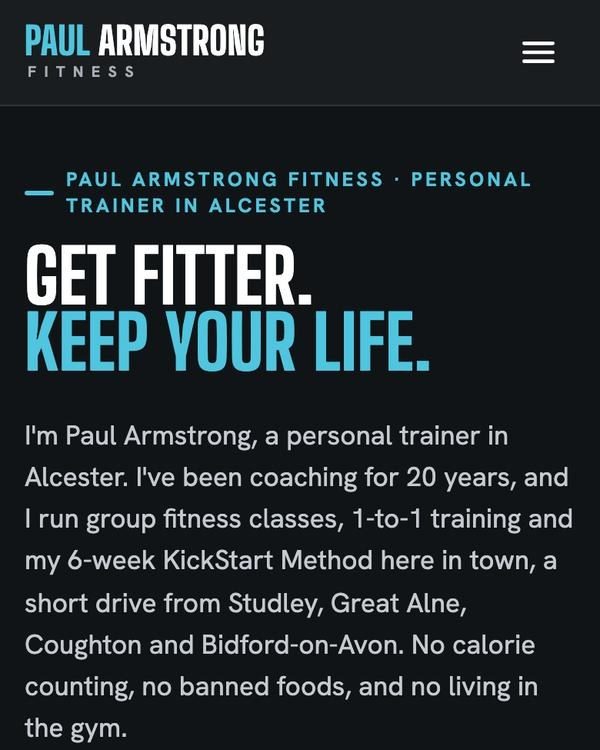
Livepaularmstrongfitness.co.uk
Paul Armstrong Fitness
Personal trainer, Alcester
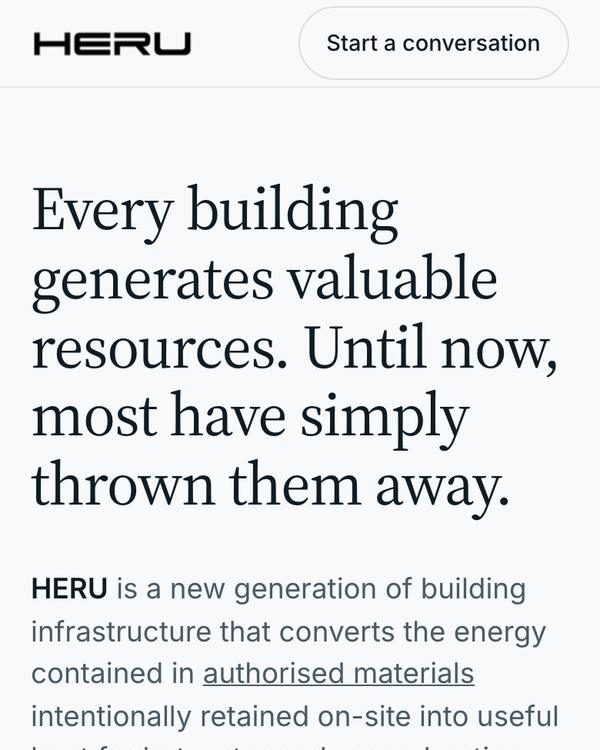

“We therefore had detailed legal and regulatory considerations behind the terminology used throughout the website.”
Read it in full
Archie recently designed and built the new website for HERU Technologies, and I was extremely impressed by both the quality of the finished site and the way he approached what was a surprisingly complex brief.
One of the biggest challenges was language. HERU operates in an area where the distinction between an authorised material intentionally retained for a further purpose and something simply discarded can be important. We therefore had detailed legal and regulatory considerations behind the terminology used throughout the website. At the same time, we absolutely did not want the site to read like a legal or technical document.
Archie understood that challenge very quickly. He worked through the wording, structure and user journey so that a first-time visitor can understand what HERU is and what it does, while ensuring that the terminology remains disciplined and consistent throughout the site.
That balance between simplicity for the visitor and complexity behind the scenes was, for me, one of the strongest aspects of his work. He didn’t simply build what we asked for; he understood the problem we were trying to solve and designed the website around it.
The result is a website that represents HERU far better: clean, contemporary and easy to navigate, but with considerable thought behind what appears on the surface to be very simple communication. I would have no hesitation recommending Archie for a business looking for someone who can combine web development with genuine problem-solving.
I’ll build it first. You decide after.
Tell me the name of the home, and whether it is one home or a group. I send you three homepage designs within a day, then build the whole website in the one you pick, every page written, usually in about 2 days, and send you a link. Look at it in your own time, and show the owner and anyone else with a say.
If you want it, it’s £650 for one home: a £162.50 deposit once you’re happy with the design, and the rest within 7 days of it going live. A group is priced in writing on the number of homes, before I build. If you don’t want it, say so and it comes down. You pay nothing, and I won’t follow it up.
For the owner
- Your domain (your web address, like yourbusiness.co.uk) is bought in your name, on your card. About £10 a year, paid to the company you buy it from, not to me. I send you a one-page guide to buying it.
- Already have a domain? The new site goes live on it, and your email is not touched.
- Every login is handed over in writing once it is paid for, and the hosting moves to an account in your name at no cost. Nothing is locked to me.
- No monthly fee unless you choose monthly care: £29 a month for up to five changes, stop any time.
- If you change your mind after saying yes, the 25% is kept for the work done. If I can’t get it live for a reason on my side, it comes back in full.
- You pay by bank transfer to the account named on the invoice. My bank details will never change by message.
- Your business information is kept confidential and used only to build your website. The full terms are on this site.
Already have a website? When I rebuilt Stratworth Advisory’s website, I measured both home pages the same way on the same day: the old WordPress one took 7.4 seconds to show its main content, the new one 0.8 seconds. How it was measured
What care homes and nursing homes need from a website.
Your CQC rating, shown properly, for every home
Families look it up on the CQC’s register anyway, so show it first and show it properly: the rating, the date the report was published, a link to the full report, and every home in a group listed separately, because each one is registered separately and has its own rating and its own registered manager. The rules already ask for this. Your rating has to be on your website where people looking at the home will see it, within 21 days of a new report being published. The CQC gives you a widget that shows the current rating and changes when a new report comes out, so the page never shows an old one. If a home sits at Requires improvement, say what has changed since and who is responsible for it. An honest rating, shown plainly, is trusted more than a page that says nothing.
What it costs a week, and what that does not cover
It is the first thing every family wants to know, and hardly any home says. So they ring four homes, hear “it depends on the assessment” from all four, and go with whoever rang back. A weekly range for each type of room, residential, nursing, dementia, respite, and what a larger room or a garden view adds, is enough. Under it, a plain line on what is included and what is not: say outright whether hairdressing, chiropody, newspapers and escorted appointments are charged on top, and whether anything is payable up front. That is what the Competition and Markets Authority’s advice to care homes asks for too: an idea of the weekly fees for people paying for themselves, on your website, with what they do and do not cover. You are not quoting. You are letting the families who can afford you get as far as the visit.
Who pays for what, explained before they have to ask
Self-funding, local authority funded, NHS continuing healthcare, NHS-funded nursing care, third-party top-ups, a deferred payment agreement with the council. A son organising this in a fortnight has heard half those phrases and is too embarrassed to admit he does not know what they mean. A page that takes each one in turn, who assesses it, who arranges it, who pays whom, does more for a family at midnight than any brochure. Then say which routes your home actually takes. A family who only finds out at the visit that you do not accept council rates has lost a day they did not have.
Which rooms are available this week, with the date on it
A family ringing round on a Tuesday needs to know who has a room this week, and the answer changes constantly. Most homes make them ring to find out, so they ring whoever answers first. Put a vacancy line on each home’s page: one residential room available now, nursing full, respite from the 14th. Then the date it was last updated, right beside it, because a line with no date on it could be from last spring. That is what sends the enquiry to you instead of the home up the road. It only works if updating it is somebody’s job on a Monday morning. A stale vacancy list does more harm than none at all.
Photographs of the actual bedrooms, not the garden in June
The photograph most homes lead with is two pairs of hands. What a daughter is trying to picture is the bedroom her mother would actually be in: the window, how big it is, where a wardrobe goes, whether there is an ensuite, whether the armchair and the photographs from home would fit. Photograph the rooms you have, and say roughly the size and what is fitted. Then the lounge, the dining room, the corridors and the garden as they look on an ordinary Wednesday. A home that shows the actual building reads as a home with nothing to hide.
A virtual visit, for the family who cannot come yet
The son who lives at the other end of the country, and the daughter choosing between three homes in one afternoon, both want to see inside before they visit. A short video walk-round does it: in through the front door, along a corridor, into a bedroom, the lounge, the dining room and out to the garden, with nobody in it who has not agreed to be. Put it on the home’s own page, next to the photographs. Then offer a video call with the manager for anyone who cannot get there, and say how to book one. It does not replace the visit. It gets the right families to it.
A section for families, written for the week they are having
The person reading is often doing this for the first time, and in a hurry after a hospital stay. Give them a section of their own: what happens from the first call to moving in, what to bring, how visiting works and how to arrange a look round. Write the day down, from what time people get up to who runs the afternoon, and put this week’s menu up and change it. Say how to raise a concern and link your complaints procedure, because a home that says how to complain reads as one that listens. Then give them a way to ask in writing, a form with room to describe the situation, whether it is a hospital discharge, and when a room is needed, because the research is often done at eleven at night, when a phone number is no use.
A careers page that would make a carer apply
Most homes are hiring all year round, and the careers page is often one line: “we are always looking for caring people”. A carer comparing jobs wants the roles you are hiring for, the hours and shift patterns, the pay, whether you pay for training and qualifications, and how to get there without a car. Then a short application they can finish in a few minutes without a CV, and a named person who replies. The same page says something to families as well: a home that is open about how it looks after its staff is showing them how it looks after the people who live there.
What usually goes wrong.
Already got a website? Check your current one
Almost every care home site opens with the same photograph: a young hand resting on an older hand, lit like a greetings card.
Underneath it there are no fees, no vacancies, and the CQC rating is either missing or from an inspection three years ago. That rating is the first thing a family checks, and they will check it on the CQC’s own register whether you show it or not, so a stale one on your page reads as carelessness.
Then there is no photograph of a bedroom anywhere. Twenty pictures of the garden in June and not one of the room somebody would actually sleep in, which is the only room the family is trying to imagine, and no way to see inside without driving there. The only way to ask a question is a phone number answered Monday to Friday, when the research is being done at eleven at night by a daughter who has just got back from the hospital.
Group sites go wrong in one particular way. Four homes flattened onto one page, one rating implied across all of them, no registered manager named anywhere, and the old individual home sites left up years after anybody stopped maintaining them. The careers page, if there is one, has no roles, no hours and no pay on it. Add a brochure locked inside a PDF that is a pain to open, and a page heavy enough to stall on a weak signal in a hospital corridor, and the enquiry goes to whichever home answered a question the family never had to ask for.
Fair questions, answered plainly.
Straight answers on care home web design: what the site needs, what the rules ask for, and what it costs.
Guides
Similar businesses
Fair questions
What should a care home website include?
Your CQC rating for each home, weekly fees and what they do not cover, who pays for what, vacancies with the date, photographs of real bedrooms, a virtual visit, a section for families and a careers page with roles, hours and pay. The full list is in what a care home website should include.
Does our CQC rating have to be on our website?
Yes. CQC’s guidance says the rating must be on the provider’s website, where people looking for the service will see it, within 21 calendar days of the report being published. CQC supplies a widget that updates itself.
Should a care home publish its fees?
The CMA’s consumer law advice to care homes says to publish indicative fees for self-funders on the website, with what is and is not included and anything payable up front.
How much does a care home website cost?
£0 to see it. £650 for one home, built and live on your own domain: £162.50 when you say yes and £487.50 within 7 days of it going live. Or £900 with a year of changes. A group is priced on the number of homes, in writing, before I start.
How do we update the vacancy line each week?
You send me the change by message or email. With the year of changes (£900) or monthly care (£29 a month), up to five changes a month are included, done within two working days. Without either, changes are £50 for up to five. There is no editor to log into.
Can you build one website for a group of homes?
Yes: a page, a rating and a vacancy line for each home.
How long does it take?
Three homepage designs within a day, then usually about 2 days to build. Then you look at it in your own time, before deciding anything. Once you say yes, it goes live within 3 working days of your last change, and within 14 days at most.
What’s the catch?
Here is everything it can cost you. If it’s a no, nothing. If it’s a yes, 25% to go ahead: it is kept if you change your mind before the site goes live, and refunded in full if I can’t get it live for a reason on my side. The rest is due within 7 days of it going live. Your domain is about £10 a year, paid by you. Changes after it goes live are £50 for up to five, unless you have the year of changes or monthly care, and you send them to me: there is no editor to log into. And nobody can promise you a place on Google, me included.
Is there anything to sign?
Nothing to see it. If you want it, I send an order form that sets out the pages, what goes on each one and the price. A reply saying “confirmed” is enough, and no signature is needed. The terms are on this site.
yourbusiness.co.ukNot built yet
Send me your business and I’ll build it.
Your business name, what you do and where. That is enough to start. I build it, send you the link, and it costs you nothing to see it.
You deal with me, Archie Spencer. I build every site myself. I reply within 24 hours.
Said yes on a call already? You don’t need this form. Your link comes through on WhatsApp.
Got it, thank you. It has come straight to me.
I reply within 24 hours. Within a day I send you three homepage designs. Pick one and I build the whole website, usually in about 2 days. Nothing is payable unless you want it.
Got photos or a logo? Send them on WhatsApp, or email archie@archiespencer.com.
Send photos on WhatsApp